





U.S. Customs and Border Protection (CBP)
will send about 100 agents to the Mexico border to speed up crossing times, a U.S. congresswoman said on Thursday , as businesses grapple with trade delays after officers were redeployed to immigration duties.
The slowdowns began late last month after U.S. President Donald Trump threatened to close the border if Mexico did not halt a surge of people seeking asylum in the United States.
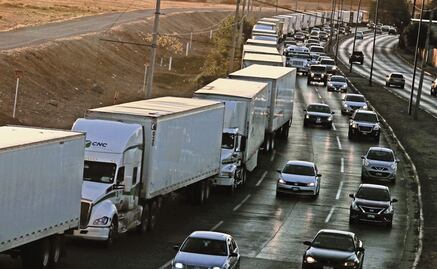
The administration moved several hundred border agents to handle the influx of migrants, triggering long delays for cross-border traffic because of the staffing shortage.
As soon as Monday, CBP plans to send officers from the Canadian border and other parts of the country to El Paso, Texas, said Democratic U.S. Representative Veronica Escobar of Texas, noting she had been informed by CBP Deputy Commissioner Robert Perez .
CBP did not immediately respond to a request for comment.
The Rio Grande Valley , on the eastern edge of the border, was being considered as another point to deploy extra officers, Escobar added.
Wait times totaling hours have hit industrial trade hard.
Losses have amounted to $800,000 a day for transportation businesses in Mexico’s Ciudad Juárez across the border from El Paso, said the head of Mexican trucking association CANACAR, Manuel Sotelo .
Data from border business association Index Juárez showed that losses from 28 exporting firms in Ciudad Juarez that utilize the crossing total $15 million over the past week .
In El Paso, several truckers said they usually did four crossings a day and were now managing only one.
Some manufacturing plants, including automotive factories that depend on constant cross-border shipments, have turned to expensive air freight to stay on schedule.
Passenger vehicles that would normally wait up to an hour and a half to cross are now facing four-hour waits.
dm

Noticias según tus intereses
[Publicidad]
[Publicidad]