


[Publicidad]


While the United States acknowledged that it is keen to negotiate, governments of Mexico and Canada assured that even though there are differences, they will find consensus.

Regarding the difficult task of modernizing the North American Free Trade Agreement ( NAFTA ), Canada’s Foreign Affairs Minister , Chrystia Freeland , said:“Of course this doesn’t mean we’re going to agree on all points. But our deep friendship will permit us to resolve disagreements which arise at times,” while U.S. Trade Representative , Robert Lighthizer , assured that there was “a mutual agreement on many important issues.”
However, Chrystia Freeland concluded:“Canada, the United States, and Mexico, all wholeheartedly share the goal of reaching a mutually beneficial agreement .”
Robert Lighizer concluded: “I am hopeful we can arrive at an agreement that helps American workers, farmers, and ranchers while also raising the living standards of workers in Mexico and Canada.”
Mexico's Economy Minister Ildefonso Guajardo said that the second round of negotiations on NAFTA held in Mexico from September 1 to 5 was successful and that important progress was made in several disciplines.
"We definitely are committed to a process in which we can accommodate each countries' interests and at the end of the day we can end up with an agreement that will be definitively a victory for the three nations involved," Ildefonso Guajardo concluded.
The three countries will continue their respective internal consultation processes in preparation for the third round of negotiations to be held in Ottawa , Canada , from September 23 to 27 .
sg


[Publicidad]
Más información

Mundo
Canciller de Rusia se reunirá con Marco Rubio en NY; dice que Moscú está dispuesto a nueva ronda de negociaciones sobre Ucrania

Lucy Bravo
Todo es legal
Mundo
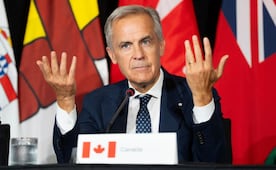
Carney ofrece Canadá como refugio inversor ante ruptura del orden económico mundial; anuncia medidas para atraer inversiones

Mundo
Comercio mundial sufre las "mayores perturbaciones" de su historia: OMC; advierte grandes costos de política comercial unilateral