


Más Información


According to Víctor Manuel Velasco , an investigator from the Geophysics Institute of the National Autonomous University of Mexico (UNAM) , the excessive rain that has struck the country in the past year responds to a pattern that repeats itself every 100 years .
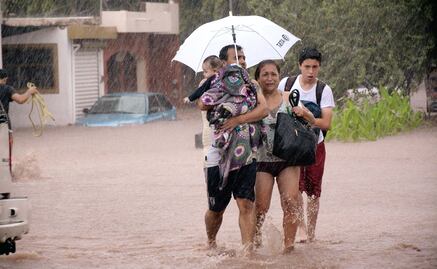
Heavy rains in Northwest Mexico have often caused traffic chaos and urban collapse. The specialist claimed that weather agencies should not only focus on when these natural disasters will occur, but also reinforce the decision making process regarding evacuation and the circulation of authorities to solve flood problems on the streets.
“Grounded in science, certain policies should be made to analyze, for instance, the construction of a deep drainage system. In France , they have a tunnel for vehicle traffic that, during times of heavy rain, is utilized to remove the water overflow from the city,” he stated.
The academic insisted that government agencies should think of measures that contribute to solving this situation: “ We cannot avoid floods, but we can minimize their negative effects , preventing human and economic losses whenever it rains more than usual in the city.”
According to Velasco, it is necessary to support our decision making in the most recent scientific advances and historic data so that we can improve our decision making.
dm

Noticias según tus intereses
[Publicidad]
[Publicidad]