


Más Información





A group of specialists from the National Polytechnic Institute (IPN) have developed a photo-refraction method to instantly diagnose myopia, hyperopia, and astigmatism in babies for the timely detection and prevention of visual impairments.
Omar García Liévanos
, head of the research project at the Interdisciplinary Center for Health Sciences (CICS) claimed that the new technique was simple and non-invasive. All it takes is a photograph of both eyes to assess their refractive capacity.
García Liévanos, who is a member of the National Institute of Astrophysics, Optics and Electronics (INAOE) , mentioned that they were looking to standarize the early visual screening test so that it may be used in hospitals throughout the country.
This device can also detect anisometropia (important differences in graduation between one eye and another), which can help avoid sensory problems such as amblyopia , which is the loss of the ability to see clearly from one eye while wearing glasses.
Through an IPN statement, the expert said that, according to international research, it is estimated that by 2050, half of the world's population will suffer from myopia and Mexico will not be the exception.
"Therefore, as part of efforts to control the high prevalence of myopia, early detection will allow for a better clinical intervention," he said.
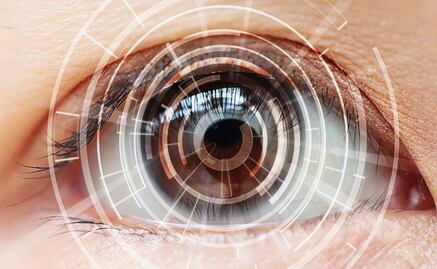
The optical principle of photo-refraction consists of illuminating the eye with a light source.
"To assess the refractive capacity, we analyze the illuminated parts of the pupil and conduct some ray tracing calculations to determine how the light reaches the retina,” he said.
dm

Noticias según tus intereses
[Publicidad]
[Publicidad]