


Más Información


More than 40 million people around the world are living in slavery , according to a joint study by the UN International Labour Organization ( ILO ) and Walk Free Foundation , in partnership with the UN International Organization for Migration ( IOM ).
Global figures of modern slavery convey that about 25 million people were victims of forced labor while 15 million were victims of forced marriage .
Forced labor is a type of modern enslavement that captures labor mostly in private homes, but also in factories, in construction, and in the countryside.
More than half of these laborers are forced to stay and put up with abuse from their employers because of their debts, yet there are cases of people who stay because they are poorly paid, physically mistreated or simply because they are too far from their place of origin to return.
Forced labor also captures sexual exploitation , and about 5 million people are involved in the commercial sex industry .
The 2017 Global Estimates of Modern Slavery and Child Labour revealed that modern slavery disproportionately affects women and girls affecting almost 29 million (71% of the total figures). Women represent 99% of the commercial sex industry and 84% are victims of forced marriage.
The global estimates of modern slavery found that 62% of the cases were recorded in Asia and the Pacific . This region is the first, in the number of victims of sexual exploitation (73%) and forced marriages (55%), yet Africa is the region where more forced marriages are registered.
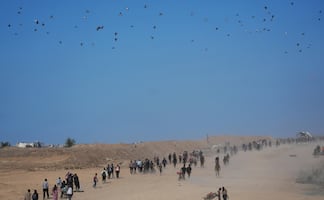
The study emphasizes that there are "links between migrations and human trafficking," especially along migration routes .
"Migrants, susceptible to aggression, extortion, and sexual abuse, can decide, at the beginning of their journey, to voluntarily put themselves in the hands of the traffickers," the study remarks.
sg

Noticias según tus intereses
[Publicidad]
[Publicidad]