


Más Información




Sac Actun
, the largest system of underwater caves in the world, running 347 kilometers beneath Quintana Roo , is a time capsule that may house 15,000 years of history.
At least according to the most recent explorations of the Great Mayan Aquifer Project , which just last month revealed the total extension of the cave system.
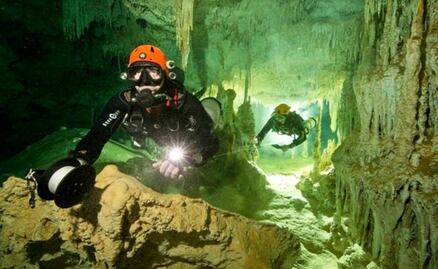
Now, the team led by archeologist Guillermo de Anda brings us the news of their latest finding: human remains of at least 10, 000 years old . This discovery could shed some light on the first settlers of the American continent.
While the exact age of the remains hasn't been confirmed yet, De Anda says the caves “flooded around 9 or 10,000 years ago, so the [remains] have been there for at least 10,000 years.”
The archeologist of the National Institute of History and Anthropology ( INAH ) and explorer of the National Geographic Society claimed yesterday, during a press conference, that given the number of human remains found in those waters, they believe "there was a constant human interaction in the area, 10 or 15,000 years ago,” and added that the findings their explorations continue revealing will be key in reviewing theories about the origin of the first settlers of the Americas and on the ancient Mayan civilization.
“An immense underwater cave houses evidence of the first settlers of the Americas, which may extend for over a thousand kilometers more on southeast Mexico. I congratulate the experts of the @INAHmx who don't stop surprising us with their findings,” shared the Minister of Culture, María Cristina García, on her Twitter account.
am

Noticias según tus intereses
[Publicidad]
[Publicidad]